Not many procurement leaders get a greenfield. Most inherit a function with legacy systems, entrenched vendors, siloed categories, and processes that predate their arrival by a decade. Shaw Ling got something rarer: a blank page inside one of the world's largest and most complex private equity firms and the mandate, however loosely defined at the start, to build something that had never existed there before.
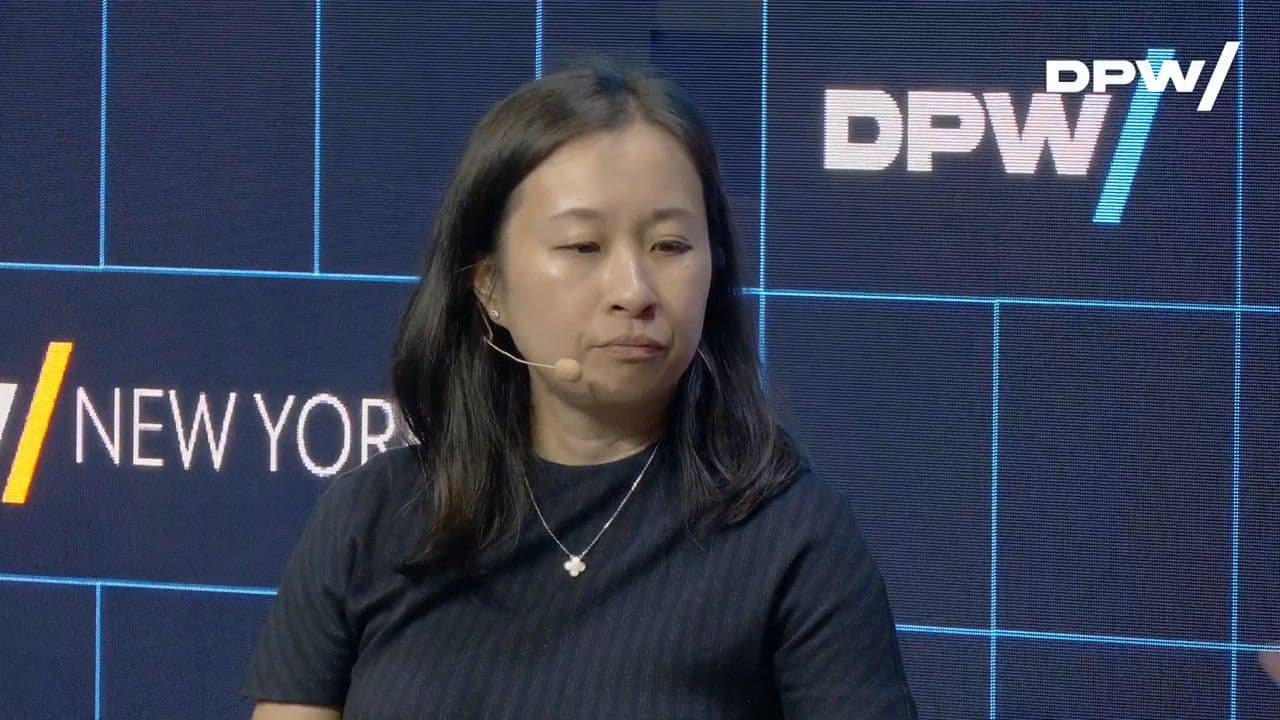
Her session at DPW New York, moderated by Chris Sawchuk of The Hackett Group, was not a technology story. It was a story about what procurement leadership actually looks like when you strip away the inherited infrastructure and have to earn every stakeholder, every dollar of savings, and every seat at the table from scratch.
What She Walked Into
KKR is a fifty-year-old firm over 5,000 employees, more than $700 billion in assets under management, and upward of 200 portfolio companies. By any measure, a mature, globally complex organisation. And yet, when Shaw Ling joined in 2023 as Global Head of Procurement and Third-Party Relationship Management, there was no sourcing function to speak of.
Over 9,000 vendor entities. Billions of dollars of unmanaged spend. No Coupa. No SAP ERP. No ServiceNow. A general ledger and a global inbox. The organisation had scaled rapidly during the pandemic, bringing in talent from major banks and structured financial institutions people experienced in their domains, but not in negotiating commercial terms. When internal teams started going to the small vendor management group for help, the honest answer was: we don't know how to do that either.
Ling's original remit was almost modest in scope: bring negotiating capability into the organisation. That was the start of it. What she built from there is the more instructive story.
The First Ninety Days: Listen Before You Build
When asked about her 90-day plan, Ling was candid she had just had her second child and did not walk in with one. What she did instead was spend those first three months speaking to over 300 stakeholders, vendors, and internal contacts. Not to sell a vision, but to understand why a fifty-year-old globally complex firm had no sourcing department, what the core business actually needed, and where the most urgent gaps were.
That decision, to diagnose before prescribing, shaped everything that followed. In an environment where the language of source-to-pay, preferred supplier programmes, and spend analytics was entirely foreign, arriving with a transformation roadmap would have been counterproductive. The organisation could not yet adopt the vocabulary, let alone the framework.
Her first assigned category was market data, one of the most complex, fragmented, and politically sensitive categories in financial services, and one she was, in her own words, "voluntold" to take on. It turned out to be strategically perfect. Market data is enterprise-wide by nature. Managing it meant touching almost every team at the firm. It gave Ling visibility, credibility, and relationships across the organisation at a speed that a more conventional category start would not have afforded.
From market data, she built outward expert networks, technology, contingent workforce. Preferred supplier networks. Focus groups with business units. Meticulous savings tracking presented back to senior leadership in mock dashboards that simulated what Coupa outputs would eventually look like. The goal at every stage was the same: show results fast, make the value visible, and earn the investment to go further.
Scaling Without a Playbook
Within two years, Ling had grown the team from one to over twenty people in strategic sourcing alone a figure that does not include vendor management, procurement operations, or third-party risk management. Growth came from three sources: consulting partners brought in for flexibility and category coverage, a large global insurance firm acquired by KKR whose more mature procurement headcount was absorbed and integrated, and targeted external hires of strong category managers.
Along the way, the team delivered over $100 million in total contract value savings including something that had previously been considered out of reach: preferred rate cards negotiated with the Big Four accounting firms.
The technology build is still underway. KKR is now implementing end-to-end Coupa, a market data management tool, legal e-billing, CLM, and intake and orchestration capabilities. The absence of tech debt a consequence of starting from zero is, Ling argued, a genuine advantage. There is no legacy architecture to work around, no incumbent system to justify replacing. When the foundation is ready, the scaling can move quickly.
On AI specifically, Ling was measured. KKR is still in its foundational stages building the data layer, mapping workflows, and architecting the end-to-end picture. But the firm's unique position connected to portfolio companies, potential targets, and a global network of vendors creates unusual opportunities to pilot and learn at pace.
A Contrarian View on the Human Element
The session's most distinctive moment came when Ling pushed back, gently but clearly, against the dominant narrative of the conference.
"Everything about our business is human," she said. "It's based on relationships not just with our vendors, but with our stakeholders. Every single thing that we've been able to achieve is because of the relationships that we've built."
In an environment saturated with conversation about agents, autonomous workflows, and agentic buying, that framing landed differently. Ling estimated she spends 80 to 90 percent of her day talking to people. She asks her team to spend more than half of theirs doing the same. Her argument: if you are heads down at your desk processing transactions, you are not growing, not driving savings, and not building the kind of embedded trust that gives procurement a seat at the table when it matters.
This is not a Luddite position. It is a sequencing argument. Before the agents can work, someone has to build the relationships that make stakeholders willing to let the process change. Before the workflow can be automated, someone has to understand the workflow well enough to know where the friction actually lives. The human work is not the obstacle to digital transformation it is the prerequisite.
For a practitioner audience, this is worth sitting with. The procurement functions that are scaling AI fastest are generally the ones that already had strong stakeholder relationships, clean processes, and organisational credibility. Ling's approach at KKR: relationship-first, results-visible, technology-when-ready is building precisely that foundation.
What the Function Looks Like Now and in 2030
Today, KKR's procurement function operates as what Ling describes as an important enterprise partner less a transactional service centre and more a connective layer across twenty divisions that historically operated in silos. The team sits on AI governance committees, expense committees, and occasionally advises deal teams on vendor quality and investment viability. It is, by design, cross-functional in a way that most procurement organisations are not.
Looking ahead to 2030, Ling offered a prediction that cuts against the conventional organisational chart. She sees the convergence of functions procurement, legal ops, accounts payable, finance operations into a new kind of operational layer, unified by the workflow architecture that AI is making possible. The category manager of the future may sit inside something that does not look like a procurement department at all. A smaller core of highly skilled strategic sourcers and negotiators, supported by a multidisciplinary operational function, enabled by AI but anchored in relationships.
"I don't know if there will be a procurement department per se," she said. "But a multifaceted new type of group that's not just a centre of excellence."
The Transferable Lesson
Shaw Ling's story is not a blueprint KKR's circumstances are specific enough that few organisations would replicate the journey identically. But the underlying principles transfer clearly.
Start by listening, not presenting. Build credibility in the categories where you can move fast and show results. Make the value visible in the language your leadership already understands. Invest in relationships at a pace that feels disproportionate, because it is the relationships that make every subsequent investment compound.
And when the technology is ready when the data is clean, the workflows are mapped, and the stakeholders trust the function scale without hesitation.
The greenfield is rare. The discipline it requires is not.