
There is a version of this talk that would have been a product pitch. Alexander Atzberger, CEO of Optimizely and former President of SAP Ariba, had the credentials and the stage time to make it one. He chose not to. What he delivered instead was something rarer at enterprise technology conferences: a genuinely cross-functional perspective on what AI transformation actually requires, drawn from two careers in industries that look different on the surface but are, as he argued, more alike than most people think.
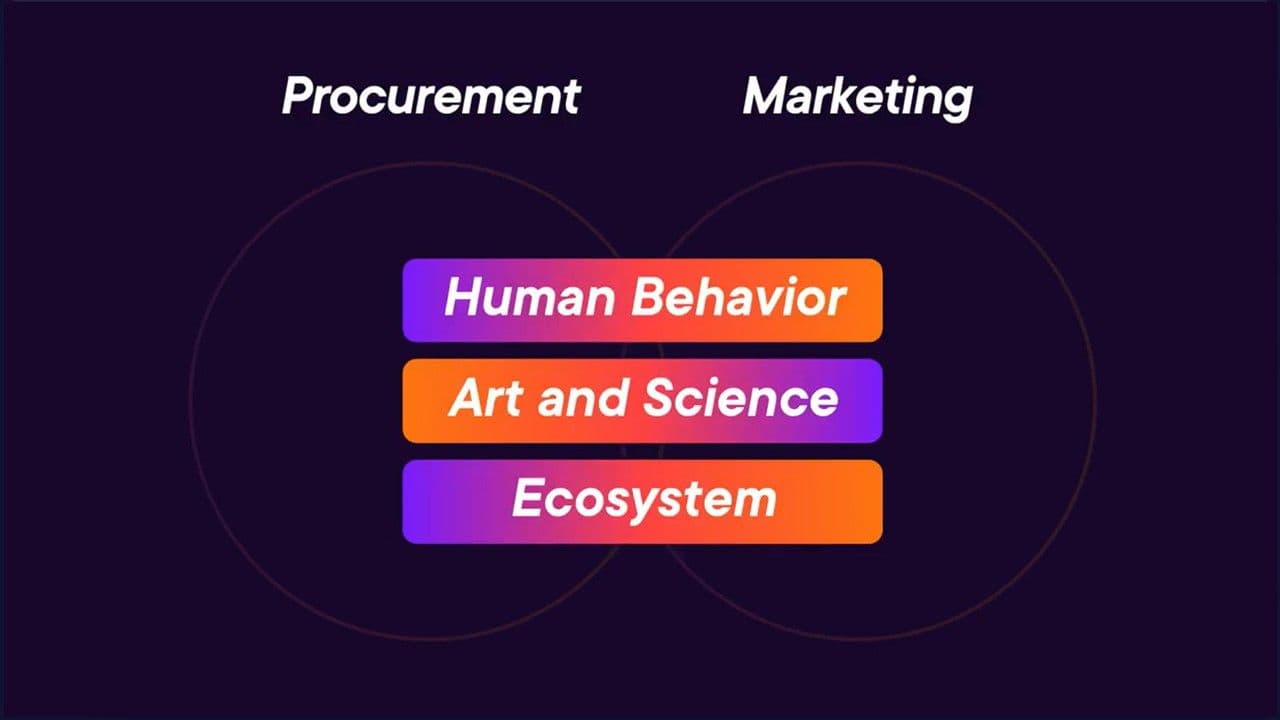
The thesis of the session was disarmingly simple: procurement and marketing share the same core challenges. Both are fundamentally about human behaviour. Both blend art and science. Both operate inside complex ecosystems of partners, customers, and internal stakeholders. And both are navigating the same AI transformation, making the same mistakes, and arriving at the same hard-won lessons. The industries switched. The mission “to change how people actually do their work - never did”.
The Gap Nobody Is Talking About
Atzberger opened with a chart that deserves more attention than it typically gets. Technology, he noted, is now changing faster than humans can adapt to it. Not marginally faster exponentially faster. If every enterprise stopped all technology investment today, it would still take years for organisations to catch up with the advances already in place. That gap is not closing. It is widening.
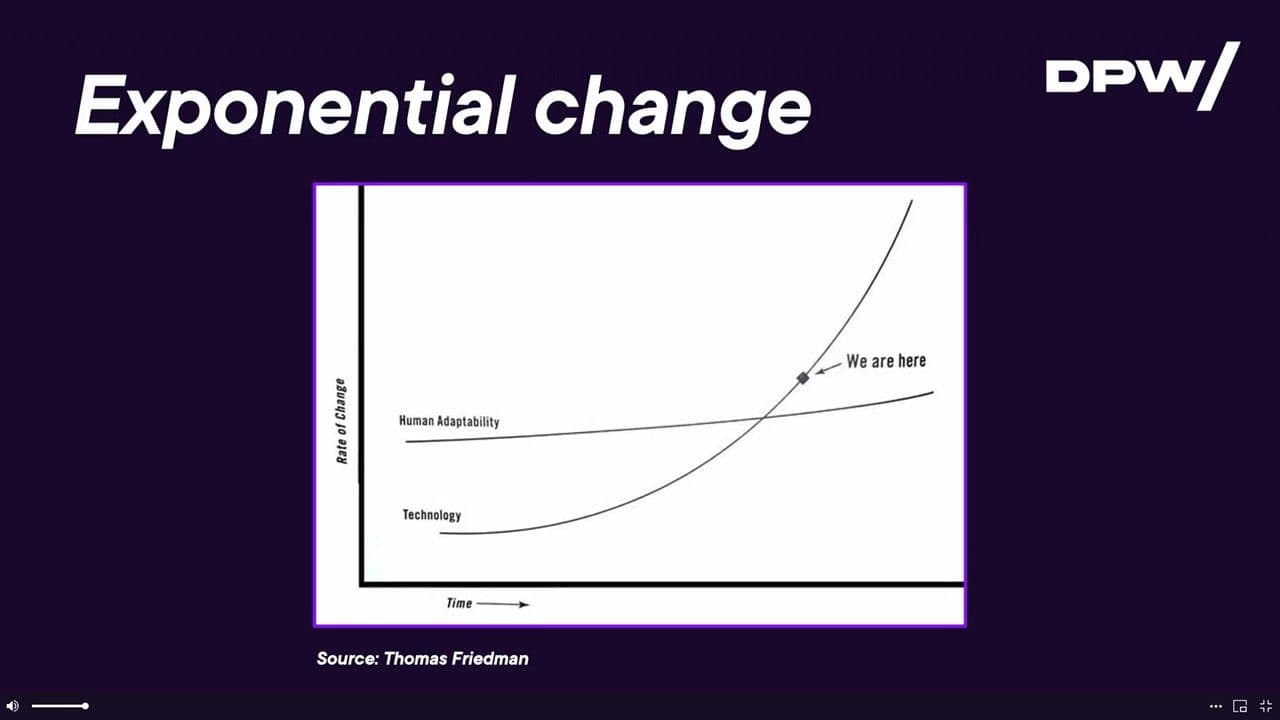
The implication is not that technology is failing. It is that user experience is the constraint. And the current state of enterprise AI user experience, Atzberger argued, is roughly equivalent to the Palm Pilot era of mobile computing. Users are being asked to learn prompt syntax, connect MCP servers, and navigate terminal screens precisely the kind of friction that keeps sophisticated tools from reaching the people who need them most. A procurement professional should be spending their time negotiating deals, not configuring integration layers.
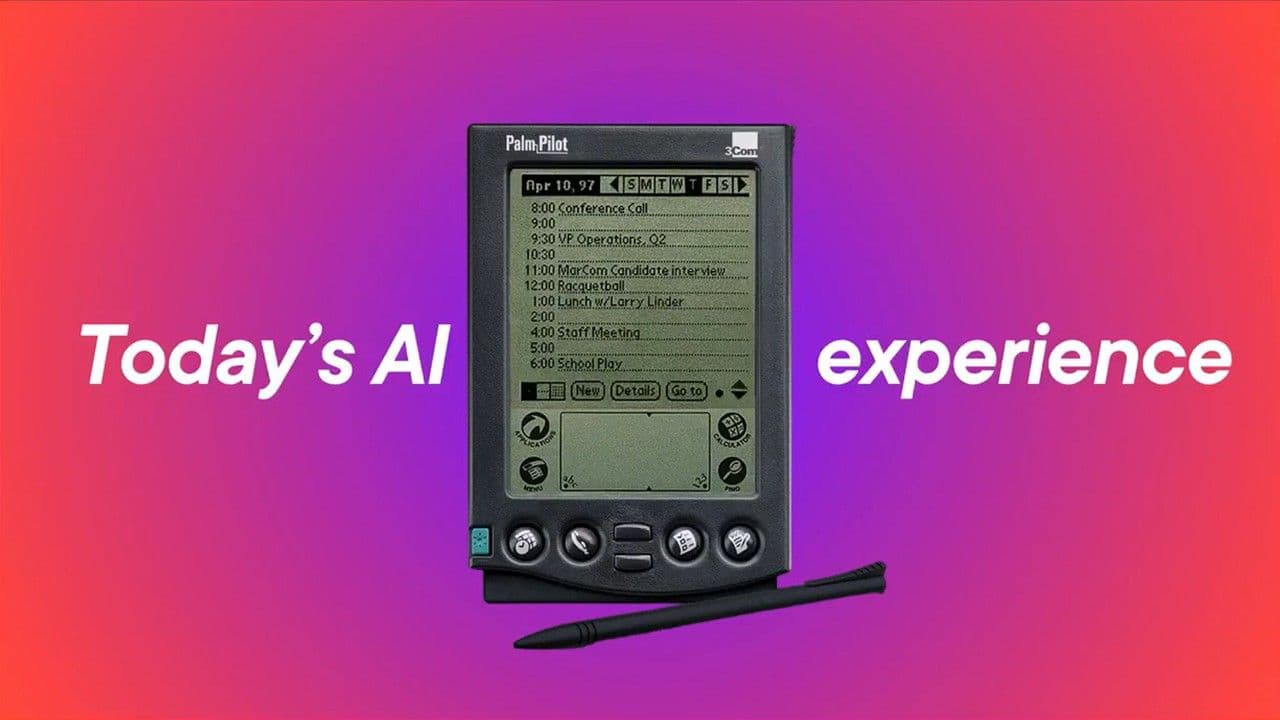
The benchmark he proposed is the one already in everyone's pocket: the smartphone. Nobody was trained on their iPhone. Nobody attended an onboarding session for their apps. The technology was designed around the user, not the other way around. That is the standard enterprise AI needs to reach and the distance between where most platforms sit today and that standard is the central challenge of this moment.

Six Lessons from the AI Journey
The heart of the session was a framework Atzberger has built from his experience across both industries. Six lessons, sequenced deliberately, each one addressing a failure mode that organisations across procurement and marketing repeatedly stumble into.
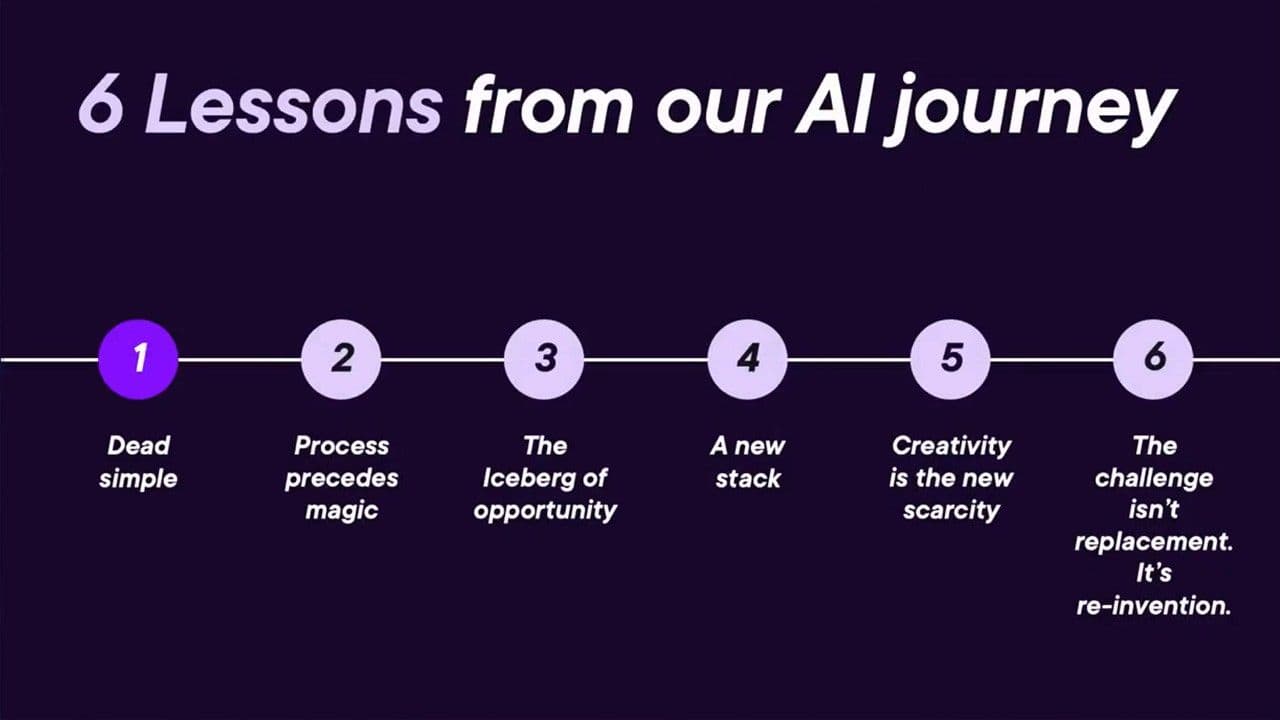
1. Dead simple. Complexity is the enemy of adoption. The answer is not better training programmes, it is better design. Hiding the complexity of AI behind interfaces that feel natural is the work. His team at Optimizely has approached this by embedding prompts behind simple buttons, so the interaction requires no AI literacy from the user. The prompt happens; the output arrives. That is the model.
2. Process precedes magic. When AI genuinely works, when it feels effortless and the outcome is exactly right, it feels like magic. But that magic is the product of deep, prior investment in understanding the underlying process. The first area of marketing where AI felt magical was customer support, precisely because customer support has a defined talk track, a clear process, and well-understood success criteria. Procurement, Atzberger argued, has enormous structural advantages here: many of its core processes are already well-defined. That is the foundation on which AI magic gets built.


3. The iceberg of opportunity. Most organisations are working on the tip of the iceberg, the tasks visible above the waterline, the ones they already know how to do with the people they have. The real opportunity lies below: the work that has always been important but has never been resourced. Compliance checking across thousands of assets. Obligation monitoring across hundreds of contracts. Website personalisation at account-by-account scale. These are not new ideas. They are ideas that finally have an execution path, because AI can operate at a volume and consistency that no human team ever could.
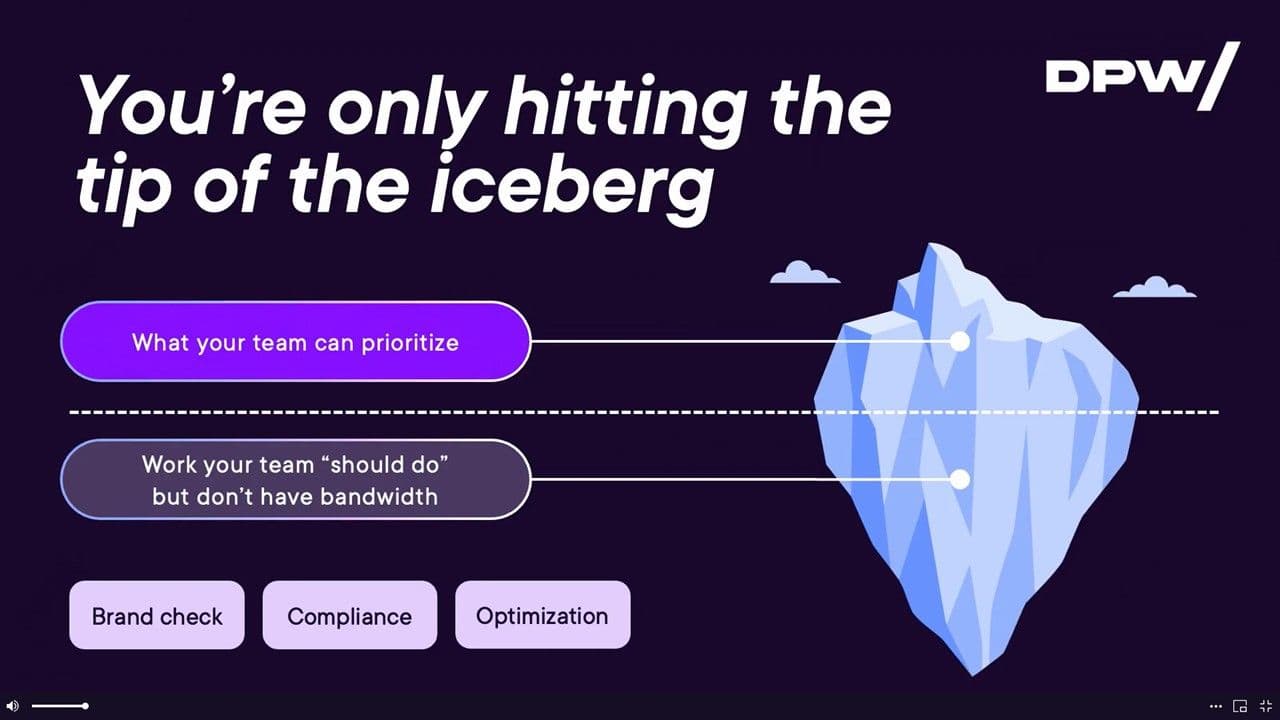
The iceberg question is the right diagnostic for any organisation trying to prioritise AI investment: what is the work we know we should be doing but have never had the bandwidth to do?
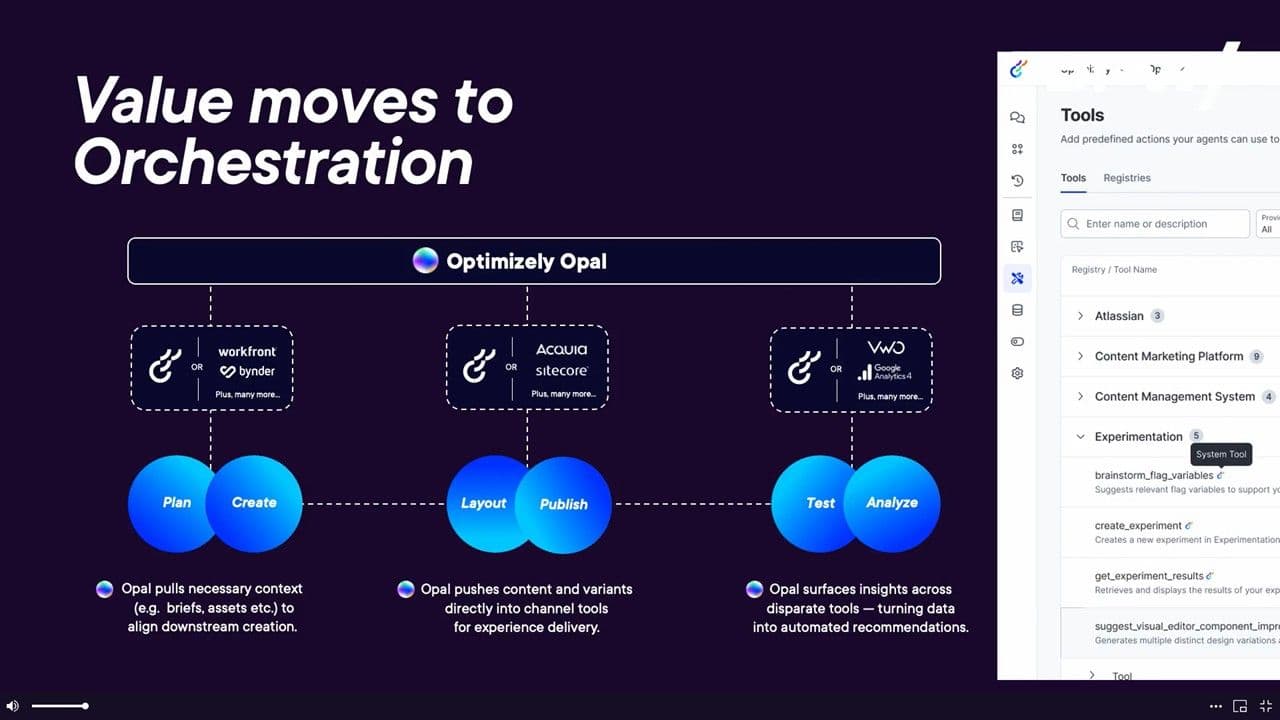
4. A new stack is emerging. The technology architecture underlying AI-enabled functions is settling into a recognisable shape.
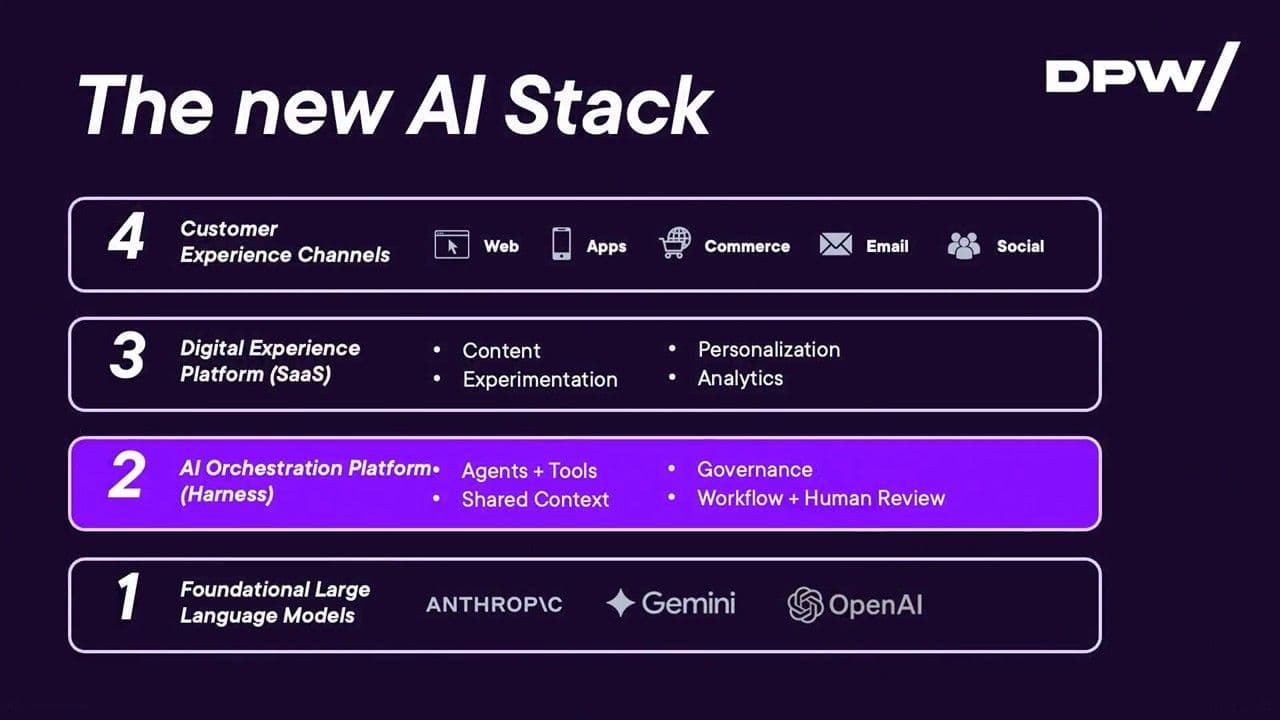
At the foundation: large language models interchangeable, commoditising, improving continuously. Above that: an AI orchestration layer, where governance, workflows, context, and enterprise-specific intelligence live. This is where value is concentrating. The LLM is increasingly a commodity choice; the orchestration harness is where companies will build durable competitive advantage. Above that: existing applications, source-to-pay in procurement, content and experimentation platforms in marketing. And at the top: the channels and interfaces where users and customers actually interact. The orchestration layer is the strategic bet worth making now, because that is where the enterprise's knowledge, processes, and accumulated intelligence will be encoded. The LLM underneath it will change. The orchestration layer will compound.
5. Creativity is the new scarcity. Content is no longer scarce. Any organisation can produce any volume of any type of content with trivially low investment. What is scarce and increasingly valuable is making that content genuinely good. Giving it meaning. Making it specific. The organisations that will win are not the ones with the highest AI output volume; they are the ones with the taste and judgment to know what quality looks like, and the creativity to produce it consistently. As an illustration of what this looks like in practice, Atzberger described Opal University an internal educational initiative at Optimizely, vibe-coded by a single employee, launched in under two months, and now with over 2,700 people on the waitlist.
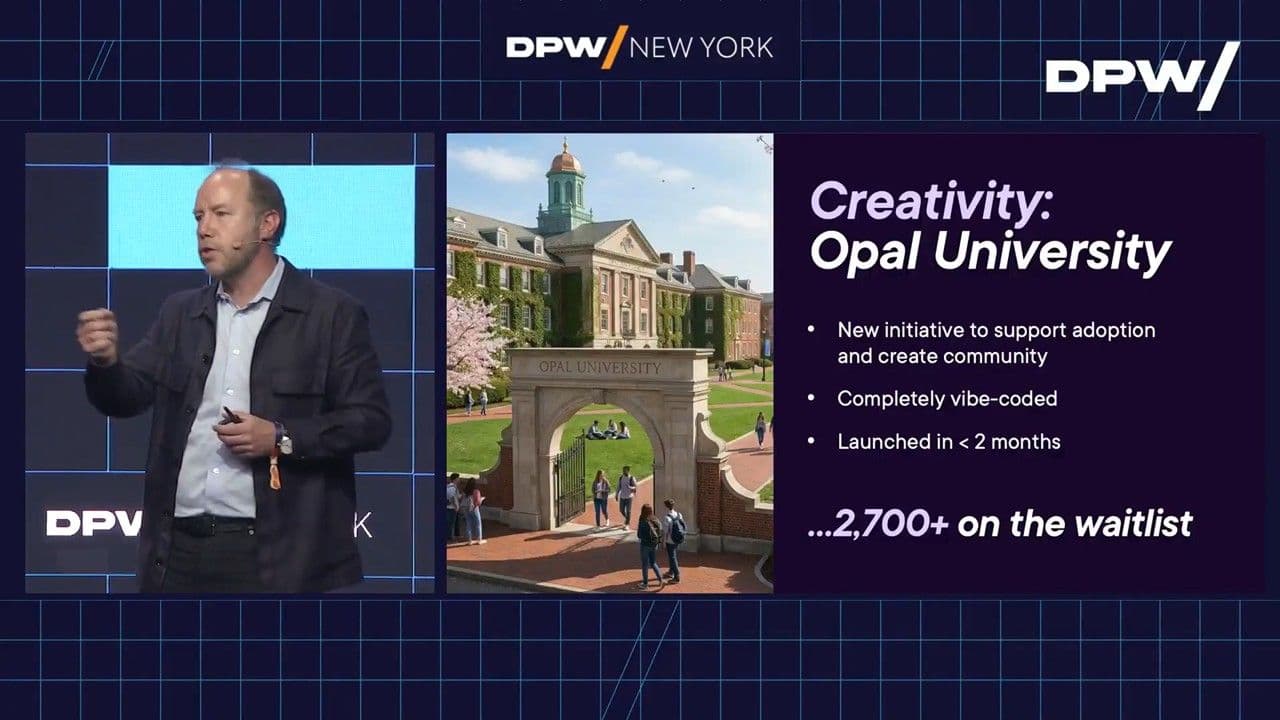
That is a below-the-waterline outcome. It could not have existed before. It happened because one person with creativity and AI access was given room to build.
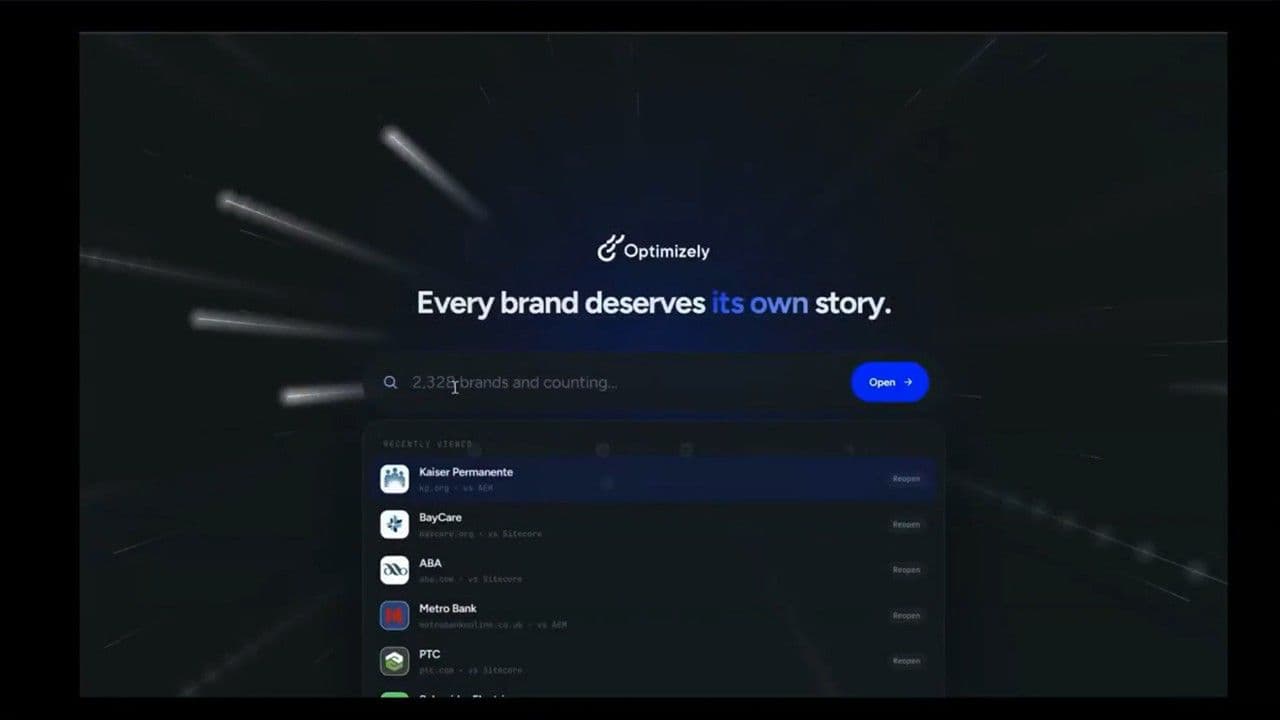
6. The challenge is not replacement. It is reinvention. Automating an existing process is valuable. Building something that could not have existed before is transformational. Atzberger demonstrated this with a live example: Optimizely's AI generates entirely custom websites on the fly, tailored to specific target accounts pulling in the prospect's technology stack, regional structure, key stakeholders from LinkedIn and Salesforce, and competitive context and assembling it in real time. To do that for over 2,000 target accounts at quality would have been humanly impossible. It is not a faster version of the old way. It is a fundamentally new capability. That is reinvention. That is what the AI investment is actually for.
Manufacture Time, Not Just Save It
One of the session's most useful reframes came in the closing remarks. The standard way organisations talk about AI efficiency is in terms of time saved. Atzberger rejected the framing. The right way to think about it, he argued, is time manufactured. AI is not eliminating tasks, it is producing additional capacity that did not previously exist. The question is what you do with that capacity.
And the answer to that question is a talent problem, not a technology problem. If an organisation frees up significant time through AI but does not have people with the skills, curiosity, and creativity to use that time for higher-value work, the efficiency gain goes nowhere.
This is why, as CEO, Atzberger said he spends most of his time thinking about talent specifically, the kind of talent that can take the manufactured time and build something with it that was previously impossible.
The Five Cs of Human Advantage
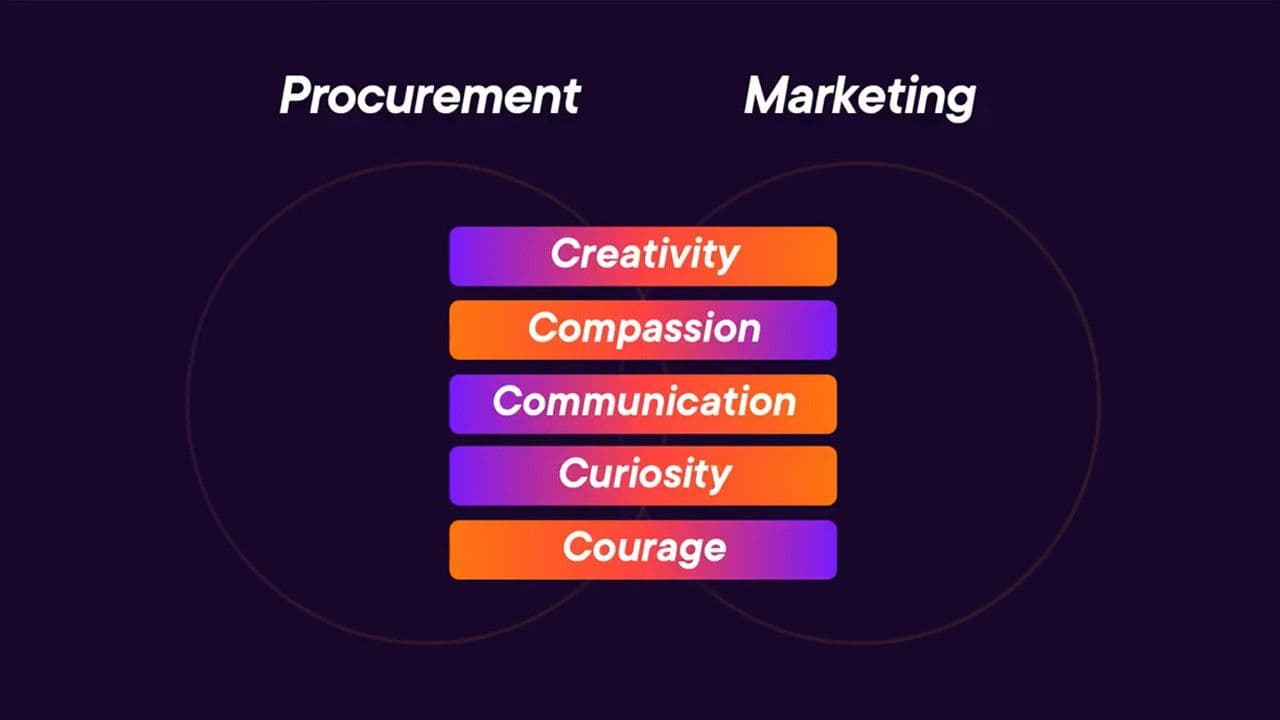
The session ended with a framework for what that talent actually looks like five traits that remain distinctly, irreducibly human in an AI-enabled environment, and that apply equally to procurement and marketing professionals:
- Creativity AI identifies patterns. Humans break them. The ability to imagine something genuinely new, outside the pattern, is what generates the most valuable outcomes.
- Compassion Understanding what a user, customer, or stakeholder actually needs at a human level, in a specific moment requires empathy that AI cannot replicate.
- Communication AI can generate communication at scale, but it cannot give communication meaning. The meaning comes from the human who understands the stakes.
- Curiosity AI can research anything you tell it to research. It cannot be curious on its own. The questions that unlock the most valuable insights come from humans who wonder about things.
- Courage AI can produce the best risk analysis available. It cannot decide whether to take the risk. That decision and the accountability that comes with it belongs to humans.
The closing image was of a young employee named Stella who, in her first two weeks at Optimizely, built five product features, created content to promote them, and shipped. Not because she was exceptional in some rare way, but because she had AI access, curiosity, and the instinct to build.
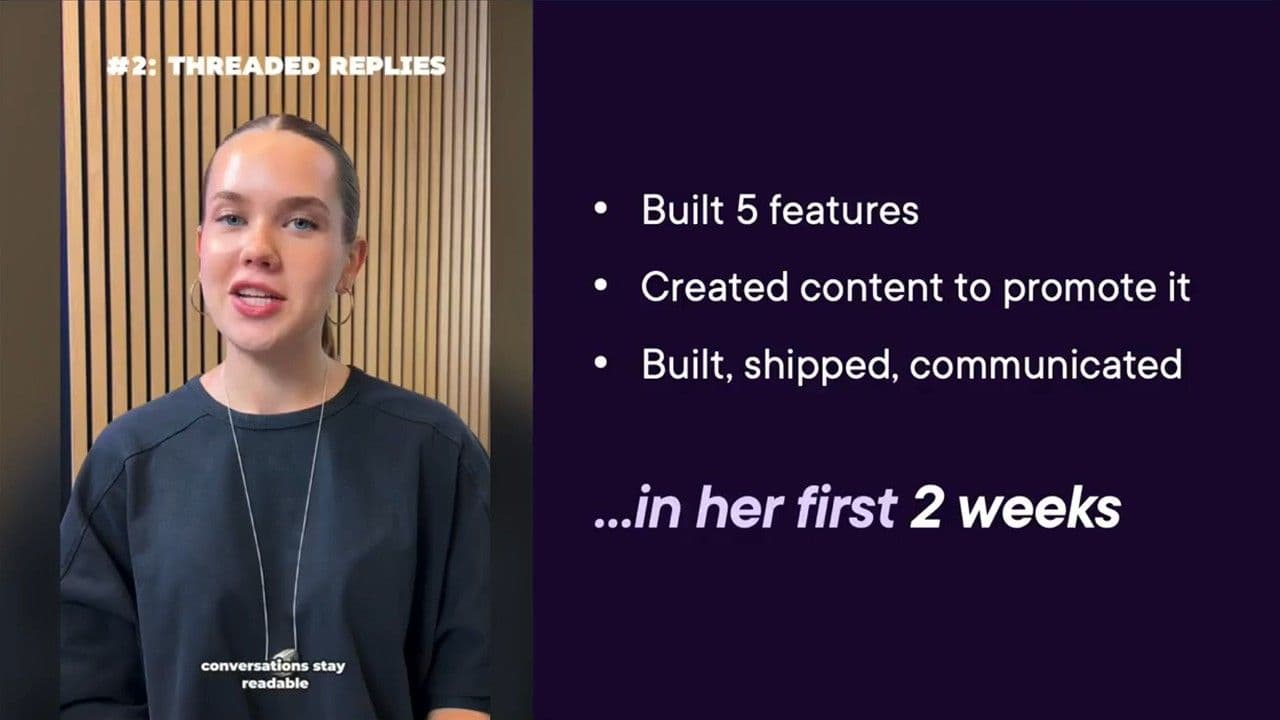
"When I joined," Atzberger said, "I spent my first two weeks connecting the printer."
That gap between the onboarding experience of the previous generation and the output velocity of the AI-native one is both the challenge and the opportunity. The organisations that understand which side of it they want to be on, and invest in the talent and culture to get there, are the ones that will not just adapt to this moment. They will define what comes after it.
The Practitioner Takeaway
For procurement leaders specifically, the Atzberger framework offers something valuable: a cross-industry validation that the lessons being learned in marketing and enterprise software apply directly. The orchestration layer argument has immediate relevance to the intake-and-orchestration conversation dominating DPW. The iceberg of opportunity is a better diagnostic than the typical ROI calculator. The five Cs are a more honest talent brief than most job descriptions. And the reinvention framing not replacement, but capability that did not previously exist is the right north star for any AI investment conversation with a CFO or board.
The industries switch. The mission doesn't.