
The standard read on 2026 is that dealmaking is booming. The data says something more specific, and more useful.
Announced global M&A reached roughly $2.8 trillion in the first half of 2026, up 48% year over year and the strongest first half since LSEG began tracking in 1980. Over the same period, the number of deals fell about 9%, to roughly 24,000, the lowest first-half count in six years. Forty-seven transactions above $10 billion accounted for more than $1.3 trillion, close to half of all announced value.
That is not a broad-based recovery. It is concentration. A shrinking number of buyers are writing much larger cheques for a narrow set of assets, financed by record investment-grade issuance of about $3.4 trillion in the half. The mid-market has not come back. The top of the market has run away from it.
Late July illustrates the pattern precisely. Most of the transactions below run into the billions, and each one turns on control of something the buyer cannot build quickly. What follows is the deal logic in each case, and what could break it.
1. Control contests: when price is not the variable
Brown-Forman rebuffs Sazerac a second time
Brown-Forman has again turned away Sazerac, whose approach values the Jack Daniel's owner at roughly $15 billion, or $32 per share. Sazerac made an initial approach in May, was ignored, reiterated its interest in a letter on Friday, and was rebuffed on Sunday on the grounds that the proposal does not match Brown-Forman's vision for its own future. The rejection follows the collapse of merger-of-equals talks with Pernod Ricard on 28 April.

The interesting part is what Sazerac has already conceded. Its offer covers both the voting Class A shares held largely by the Brown family and the non-voting Class B shares at the same $32. It gives family members the option to roll their equity into Sazerac rather than cash out, with proportional board representation, and offers a dividend above the roughly 22 cents per quarter Brown-Forman shareholders receive now. Wells Fargo and Apollo Global Management are backing the financing. Sazerac's executive chairman and CEO closed their letter by saying they remain flexible on terms.
Deal logic. Sazerac is buying distribution scale and shelf power in a declining category. A combination would create a spirits group of roughly 100 million cases against Brown-Forman's 46 million, at a moment when volumes and valuations across the industry are under pressure.
What breaks it. It is already broken, and not for financial reasons. Brown-Forman traded at $26.56 against a $32 offer. That is a premium of roughly 20%, and the family has now declined it twice. Sazerac has offered structure, board seats, dividend uplift and flexibility, and none of it has moved the outcome. That is the useful lesson: against a control bloc that has decided not to sell, improving terms is not a strategy. The nearly 150 family members spread across the world are the constraint, and no amount of premium resolves a governance question. A conventional hostile route is effectively unavailable, because the voting stock forecloses any path that runs through a shareholder vote.
UniCredit is past the point of "exploratory talks" on Commerzbank
This is where most weekly coverage is a month behind. UniCredit is not positioning for possible discussions. It has effectively won the ownership contest, and what remains is a negotiation over integration.
After the extended acceptance period closed on 3 July, UniCredit holds roughly 44% of Commerzbank outright, rising to about 48% once convertible derivatives and options are counted, in a bid valued at around 45 billion euros. Tellingly, of the 17.6% tendered, Commerzbank's own analysis of custodian data suggests less than 2% came from independent institutional and retail investors. The rest came largely from banks and parties connected to UniCredit. Independent shareholders did not sell. UniCredit simply no longer needs them to.
On 23 July, Andrea Orcel told CNBC a full acquisition could come as early as the fourth quarter of 2026, and UniCredit raised its full-year net profit guidance to 11.5 billion euros while shelving a buyback to absorb the capital impact. The German finance ministry, which controls a 12% stake and spent two years opposing the deal, said it was now for the two banks to talk. On 24 July, Commerzbank chairman Jens Weidmann called for direct negotiations. He insisted those negotiations happen with Commerzbank's management rather than via Berlin. Orcel has also signalled that he could call an extraordinary general meeting to reshape the supervisory board if Commerzbank declines to engage. He and CEO Bettina Orlopp are expected to speak shortly after Commerzbank's 6 August results.
Deal logic. A stake near 48% delivers effective control of shareholder meetings without a formal majority and without the concessions a negotiated deal would have required. Orcel has said as much. The prize is German Mittelstand lending relationships and retail distribution. Those are assets that cannot be replicated organically in a market where UniCredit already operates through HypoVereinsbank.
What breaks it. The risk is to value rather than to completion. Berlin's remaining leverage is procedural and political, and reported conditions include preserving a separate listing, protecting Mittelstand financing, and keeping the corporate seat in Frankfurt. Each of those conditions constrains precisely the integration that justifies the price, which is where the ownership victory and the economic one come apart.
A stake near 48% buys a strategic holding. Only a full legal merger delivers the synergy case, and that requires consent Orcel does not yet have. A separate listing preserved by political undertaking cannot be squeezed for cost synergies. A supervisory board he has not reconstituted cannot approve the restructuring that pays for the premium. Mittelstand lending protected by commitment to Berlin is a revenue line he cannot reprice. For that reason the indicators worth tracking from here are the works councils, the composition of the supervisory board and the wording of any undertaking given to the German government, rather than the stake percentage.
2. AI distribution: Stripe's two-front campaign
Stripe is reportedly in advanced discussions to acquire OpenRouter at a valuation near $10 billion. Treat that number as a reported potential valuation rather than a settled price. Terms are unconfirmed, an agreement may be announced shortly, and the talks could still collapse or draw a competing bidder. Several large technology companies looked at the asset before Stripe emerged as lead suitor.
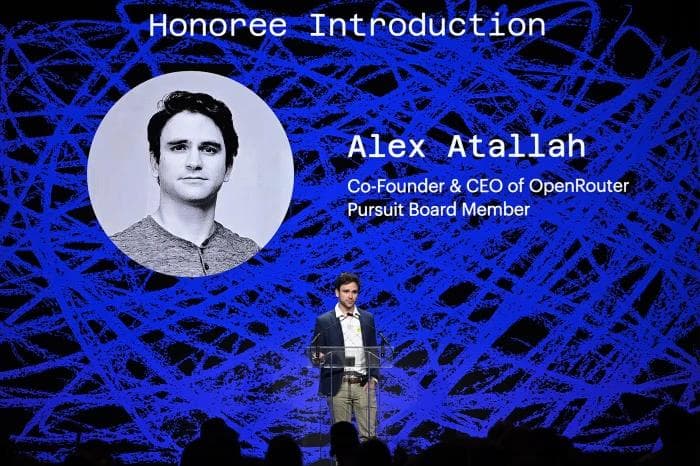
The multiple is the story. OpenRouter, founded in 2023, was valued at $1.3 billion in May following a $113 million round led by CapitalG, with annualised revenue of roughly $50 million as of April. A $10 billion outcome is roughly eight times the May mark within three months, and on the order of 200 times revenue. It routes traffic across 400-plus models for more than a million developers, letting customers switch providers without rebuilding applications.
No trailing fundamental supports that number. At roughly 200 times revenue, the buyer is not paying for the business as it currently earns. It is paying for position in future flow, and for the option value of sitting where enterprise AI spend gets directed. This is what concentration looks like inside a single transaction. The scarce asset is the routing position, there is one of it, and the price reflects the absence of a substitute rather than the presence of cash flow.
Read in isolation, that price is indefensible. Read as part of a sequence, it is coherent. Stripe bought usage-based billing platform Metronome for about $1 billion in December 2025, a business that meters AI companies by token consumption. It is simultaneously pursuing PayPal alongside Advent International, an unsolicited approach of more than $53 billion that PayPal's board rebuffed as inadequate.
Deal logic. Stripe is not buying AI tooling. It is buying the meter. Model selection, usage-based billing and payment collection are three layers of the same flow, and whoever owns all three sits between enterprises and every model provider they use. OpenRouter is the routing layer. Metronome is the metering layer. Stripe already has the settlement layer.
What breaks it. Concentration risk sits on both sides. OpenRouter's economics depend on enterprises wanting to avoid lock-in to any single provider. That preference erodes if one or two frontier labs win decisively, or if the labs price direct access below what a router can offer. And a company running a $10 billion AI acquisition and a $53 billion payments approach simultaneously is making two very different bets on where its next decade of growth comes from. One of them is likely to be wrong.
3. Infrastructure and platforms: buying capability, not capacity
Brookfield acquires Aypa Power from Blackstone
Brookfield agreed on 22 July to acquire Aypa Power from funds managed by Blackstone Energy Transition Partners for approximately $7 billion of enterprise value at closing, or roughly $3 billion of equity value. That distinction matters, and most coverage collapsed it.
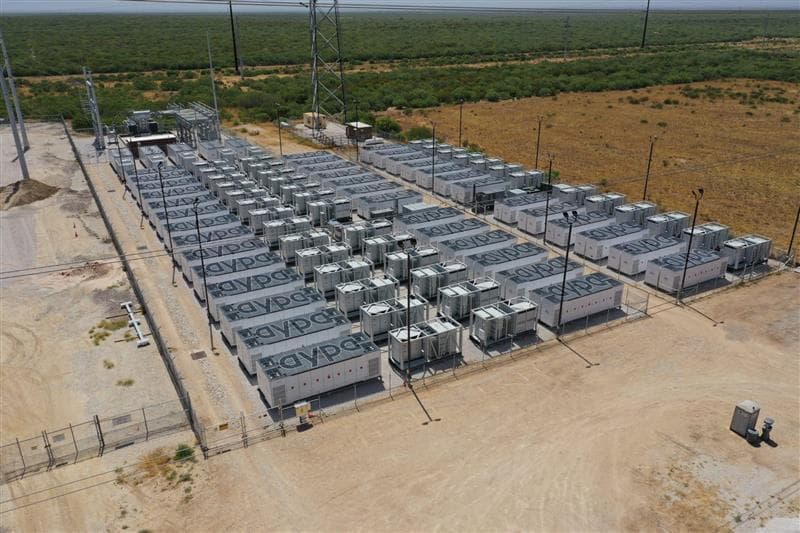
Brookfield is not buying a battery portfolio. It is buying an operating platform: the contracted and under-construction project portfolio, the development business, an approximately 200-person team, roughly 6.5 GW of operating and contracted capacity, and a development pipeline above 20 GW. Blackstone acquired the business as NRStor in 2020 with around 200 MWh of projects. Brookfield is investing through the second vintage of its flagship transition strategy alongside Brookfield Renewable.
Deal logic. The scarce input in grid-scale storage is not batteries. It is interconnection queue position, site control, offtake relationships and a team that can convert a pipeline into operating assets. A 20 GW pipeline is a claim on grid access at a time when data-centre load growth is making that access the binding constraint. Brookfield is buying development capability and the queue, then applying its own procurement and capital-markets scale to it.
What breaks it. Revenue durability is the question. Storage returns depend on the specific mix of contracted capacity payments, energy arbitrage, ancillary-services revenue and merchant exposure, and on regulatory structures that vary by market. A pipeline is an option rather than an asset. Conversion rates depend on interconnection timing and permitting that neither buyer nor seller controls. Anyone describing these cash flows as inherently inflation-protected has not read the contracts.
Berkshire closes Taylor Morrison, and it is Abel's deal rather than Buffett's
Berkshire Hathaway completed its acquisition of Taylor Morrison on 24 July at $72.50 per share in cash, representing approximately $6.8 billion of equity value and approximately $8.5 billion of enterprise value, a 24% premium to the 29 May close of $58.50. Announced 31 May, closed within two months. CEO Sheryl Palmer stays on, integrating the business with Clayton Properties Group's 15 site-built builders. That takes the combined operation from Taylor Morrison's 12 states to 21 states and 52 markets.
The framing to avoid is that this reflects Buffett's confidence in housing. This is the first major strategic acquisition under Greg Abel, who became CEO at the start of 2026. Buffett's own comment to CNBC was that Abel did it "faster than I could have done it," adding that he never spoke to the target's CEO. That is a succession signal, not a housing call.
Deal logic. Berkshire had a fragmented manufactured and site-built housing operation and roughly $400 billion of cash. Taylor Morrison supplies the national platform to consolidate around, and a land bank acquired while mortgage rates suppress the comparable set. At $8.5 billion, this is small for Berkshire. That is itself informative about how a new CEO establishes a deal record.
What breaks it. The risk is integration rather than price. Combining 15 regional builders with a national brand under one operating model is the kind of work Berkshire has historically avoided by leaving subsidiaries alone. Abel is signalling a more active posture. That is a change in Berkshire's operating philosophy, and it will be tested here before it is tested anywhere larger.
4. Semiconductors and quantum: undisclosed prices, disclosed intent
Both transactions in this section matter strategically, and neither carries a disclosed price. That combination is itself evidence for the argument. Capability and intellectual property can still be bought quietly and cheaply. What produces record headline value is the small number of assets for which no substitute exists.
Microchip Technology signed a definitive agreement on 24 July to acquire Hailo, the Israeli developer of edge-AI processors, vision processing and robotics silicon. Terms were not disclosed, closing is expected by the end of the September quarter, and Microchip stated the transaction is not expected to have a material impact on its financial results. That last point should temper the interpretation. This is a capability tuck-in for power-efficient inference in robotics, drones and industrial vision, rather than a repositioning against Nvidia or Qualcomm. Microchip's shares slipped about 1% after hours.
IBM announced on 23 July a definitive agreement to acquire HRL Laboratories, the Malibu research institution jointly owned by Boeing and General Motors, with both owners continuing as IBM partners on quantum applications afterwards. The price was undisclosed and closing is expected by the end of the third quarter. HRL brings silicon-spin qubit engineering and quantum sensing. That is a second modality alongside the superconducting architecture IBM's roadmap is built on, which runs from the 120-qubit Nighthawk through Starling in 2029 and Blue Jay in 2033. Chip fabrication moves from California to IBM's New York facility.
Deal logic in both cases. Neither buyer disclosed a price, which usually means the consideration is small relative to the acquirer and the value sits in people and IP rather than revenue. IBM is hedging its own architecture bet. Google made the same move when it added neutral-atom technology to its portfolio. When a company committing more than $10 billion over five years buys optionality on a competing qubit design, it is telling you something about its confidence interval.
What breaks them. The risks are talent retention and, for HRL, the separation itself. An 80-year-old research institution embedded in two industrial parents does not transplant cleanly into a commercial quantum roadmap, and the researchers who make the spin-qubit work valuable are individually mobile. For Hailo, the risk is that edge inference commoditises before the portfolio integration pays for itself.
5. Regulation: federal easing, subnational tightening
Two things happened in the same week, and read together they matter more than either alone.
On 23 July, the DOJ's Antitrust Division announced it had returned to targeted Second Request investigations and published a model timing agreement including an "Expedited Consideration" procedure. In practice, merging parties will face narrower initial document demands focused on the most apparent competitive risks, in exchange for giving the agency time to assess those concerns. If the questions resolve early, the review ends. The DOJ retains the option to require full compliance where concerns are substantial. Note the baseline: this administration's antitrust division has not yet challenged a merger in court.
Days earlier, twelve state attorneys general led by California obtained a 28-day temporary restraining order freezing Paramount's proposed acquisition of Warner Bros. Discovery. Judge Araceli Martinez-Olguin found the states had raised serious questions about the deal substantially lessening competition. On Friday, Paramount stipulated that it will not close until five days after a trial on the merits or 1 June 2027, whichever comes first, and the 3 August preliminary-injunction hearing was cancelled in favour of a path to full trial. The states have proposed an April 2027 trial date. The Writers Guild has filed a separate suit. The transaction had already cleared federal and European regulators.
The commercial consequence is concrete. Paramount owes Warner Bros. Discovery shareholders a ticking fee reported at $7 million per day if the deal has not closed by 30 September. Paramount shares fell 3.3% to $8.21 on the filing. Reported deal value varies by outlet. Most coverage puts it around $81 billion, while some reports place total transaction value nearer $111 billion, and anyone modelling this should be explicit about which measure they are using.
The pattern. Federal merger review is getting faster and lighter. Enforcement risk has not disappeared. It has migrated to state attorneys general and private plaintiffs, who are not bound by the DOJ's posture and who can extract delay even from deals that have already cleared Washington and Brussels. For deal planning, that changes what the regulatory workstream has to cover. A federal clearance strategy is no longer a completion strategy, and antitrust timing risk now has to be priced through a litigation calendar rather than an agency one. A ticking fee is precisely that pricing mechanism.
6. The 2026 mega-deal backdrop
Several transactions frequently cited as evidence of the current surge were announced earlier in 2026 rather than in the past week. They are valid evidence of the year's environment, not of one week's activity, and it is worth keeping the distinction:
- Bouygues / Orange / iliad to SFR (~$23 billion)
- Shell to ARC Resources (~$16.4 billion)
- Uber to Delivery Hero (~$14.8 billion)
- Martin Marietta to Lhoist North America (~$13.5 billion)
- Merck KGaA to Bio-Techne (~$11.3 billion)
- AbbVie to Apogee Therapeutics (~$10.9 billion)
- ON Semiconductor to Synaptics (~$7 billion)
The largest single data point of the half sits outside this list: NextEra Energy's roughly $66.8 billion merger with Dominion Energy, one of the 47 transactions above $10 billion that drove nearly half of H1's total value.
What the week actually reveals
The through-line is not that buyers are active. It is that a small number of buyers are paying up for positions that cannot be assembled organically inside a planning horizon. They are also increasingly willing to accept structural compromise to get them.
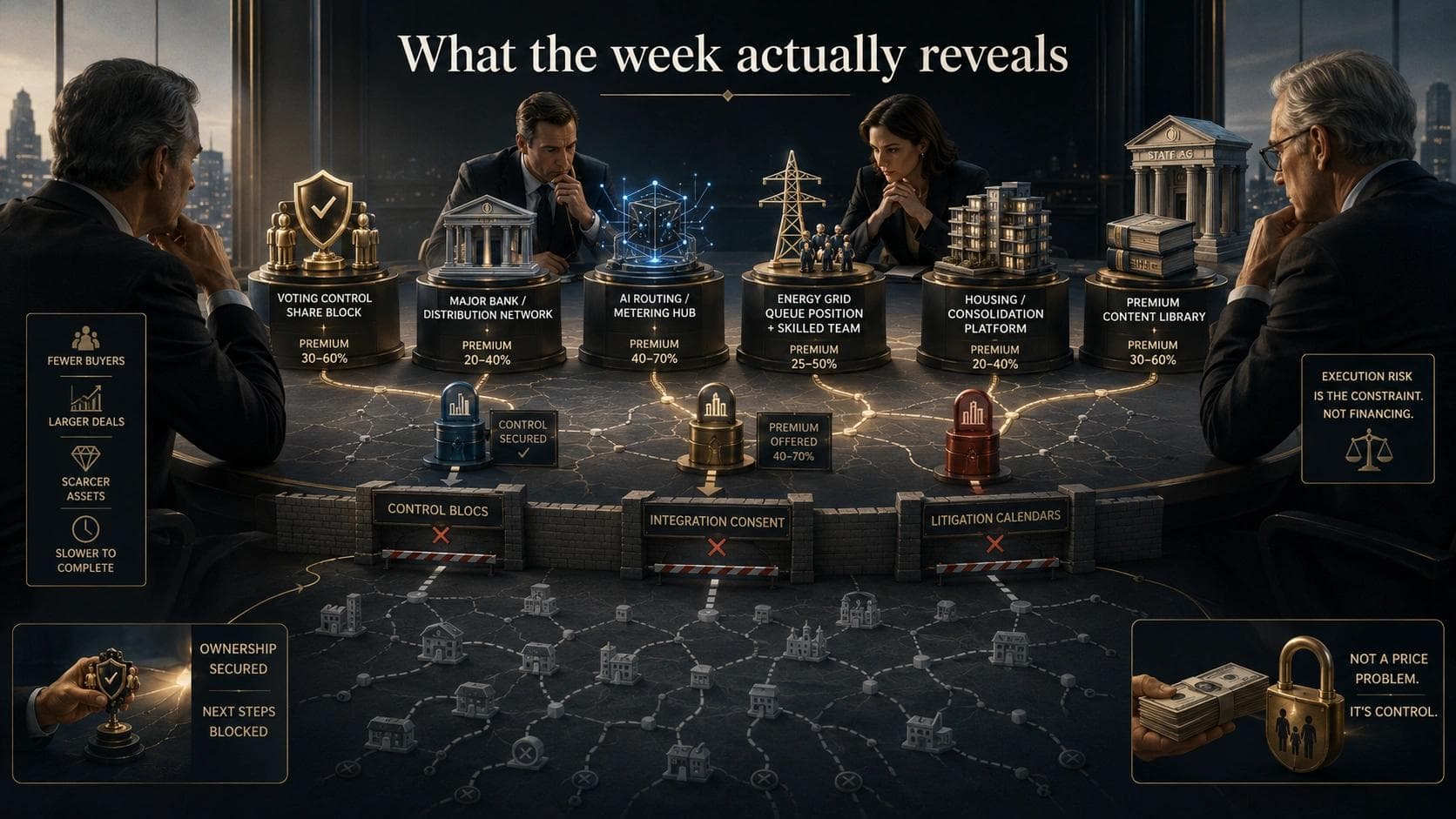
Sazerac conceded structure and got nothing, because a family with voting control is not a price problem. UniCredit refused to concede anything and took effective control anyway, and will now negotiate over the integration rather than the ownership. Stripe is paying roughly 200 times revenue for a routing layer because the alternative is not owning the meter at all. Brookfield paid enterprise value for a queue position and a team. Berkshire's new CEO paid a 24% premium for a consolidation platform in a sector everyone else is waiting out.
Meanwhile the assets that are genuinely contested are premium content libraries and national distribution, and those are the ones stuck in court, increasingly before state attorneys general rather than federal agencies.
If the first half's numbers hold, the second half will not look like a broadening market. It will look like fewer, larger, slower transactions, where the binding constraint is not financing or federal clearance but control blocs, integration consent and litigation calendars. Those are execution problems rather than appetite problems, and they are considerably harder to model.