When ChatGPT became available to the public in November 2022, it felt like artificial intelligence had suddenly entered everyday life.
People who had never written code started using AI to draft emails, summarize documents, explain concepts and prepare presentations. Developers used it to debug code. Students used it to understand difficult topics. Business leaders started asking what it meant for productivity, jobs, consulting, software and decision-making.
For many people, ChatGPT was their first direct experience of AI.
But ChatGPT was not the beginning of artificial intelligence.
It was the moment when decades of research became visible through a simple chat interface.
That is an important distinction. If we treat ChatGPT as a sudden miracle, we miss the larger story. Modern AI is not the result of one product launch. It is the result of more than 70 years of ideas, failures, experiments, funding cycles, hardware improvements, mathematical breakthroughs and business demand.
The real story is not only about one chatbot.
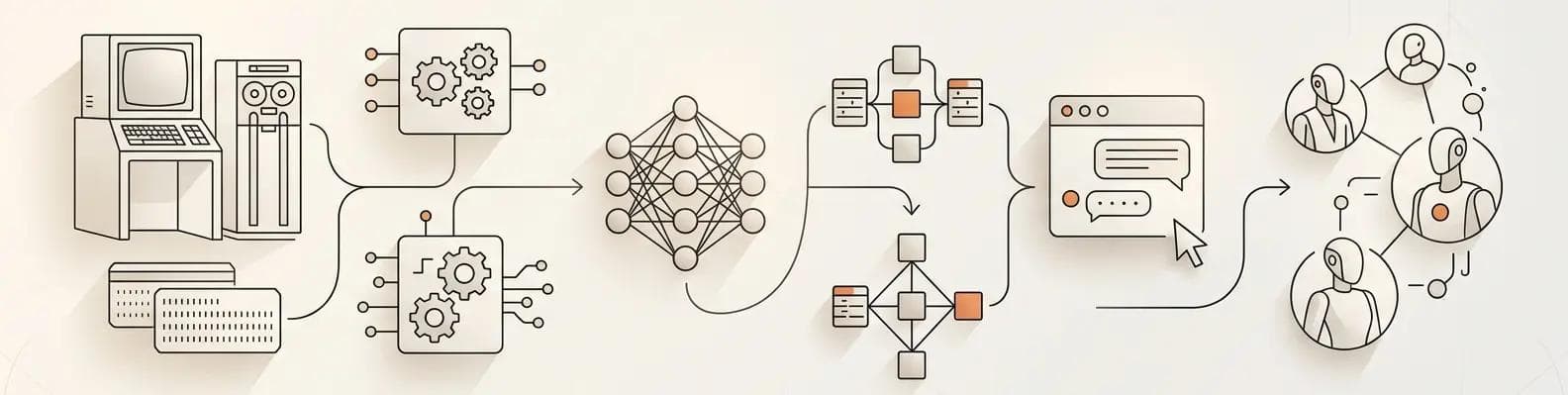
It is about how machines slowly moved from following instructions to learning patterns, generating language and now beginning to act through agents.
That journey matters because it tells us something important about the future of work.
AI is not just a tool we use. It is becoming a layer through which knowledge work may be redesigned.
The moment AI became visible
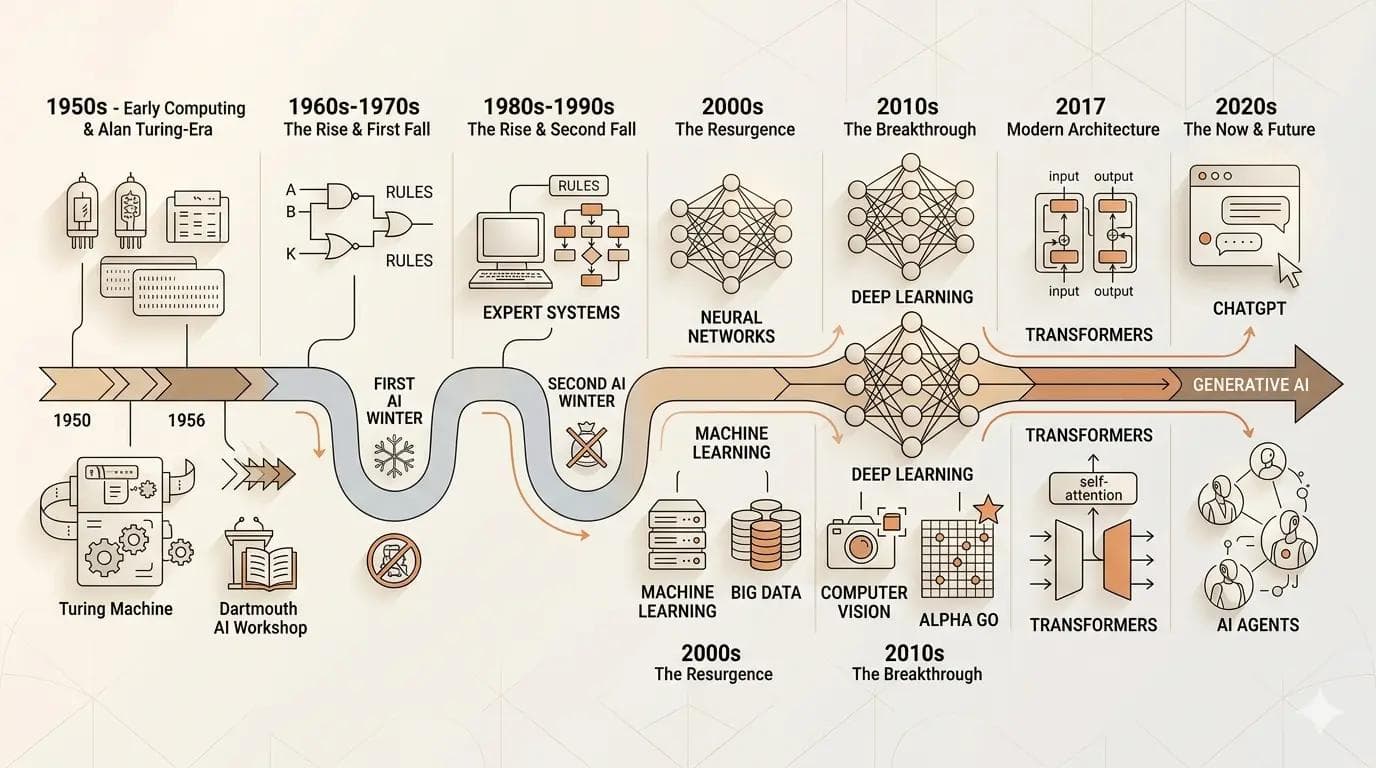
ChatGPT changed the public perception of AI because it made the technology feel personal.
Before ChatGPT, most people were already using AI in some form. Search engines used AI. Recommendation systems used AI. Fraud detection systems used AI. Translation tools used AI. Navigation apps used AI. Voice assistants used AI.
But most of those systems worked in the background.
ChatGPT was different because it spoke directly to the user.
You did not need a technical interface. You did not need to understand machine learning. You did not need to configure a complex system. You could type a normal question and get a useful answer.
That changed everything.
The interface made AI feel accessible.
This is why the launch of ChatGPT was such a public turning point. It reduced the distance between human intent and machine output. A person could ask for a summary, explanation, draft, code snippet or idea, and the system could produce something instantly.
For businesses, this created both excitement and confusion.
Excitement because AI seemed to improve productivity.
Confusion because nobody was fully sure where the boundaries were.
Was it a writing assistant?
Was it a search replacement?
Was it a coding partner?
Was it a research tool?
Was it safe for client work?
Could it be trusted?
These questions are still relevant today.
To understand them properly, we need to go back to the beginning.
The question that started it all
In 1950, Alan Turing asked a simple but powerful question:
Can machines think?
This question became one of the foundations of artificial intelligence.
Turing did not only ask it as a philosophical idea. He proposed a practical way to think about machine intelligence. If a machine could communicate through text in such a way that a human could not reliably tell whether they were interacting with a machine or another human, then the machine could be said to show intelligent behaviour.
This became known as the Turing Test.
Whether the Turing Test is a perfect measure of intelligence is still debatable. But the importance of Turing’s idea was that it made machine intelligence something researchers could discuss, test and build toward.
It shifted the question from mystery to engineering.
That shift was the beginning of a long journey.
The birth of artificial intelligence as a field
In 1956, a group of researchers gathered at Dartmouth College in the United States for a workshop that is now widely seen as one of the birthplaces of artificial intelligence as a formal field.
Researchers such as John McCarthy, Marvin Minsky, Nathaniel Rochester and Claude Shannon helped shape the early direction of AI.
The ambition was huge.
They believed that aspects of learning and intelligence could be described so clearly that machines could be made to simulate them.
This optimism was understandable. Computers were becoming more powerful. Mathematics, logic and information theory were advancing. Researchers were beginning to imagine machines that could reason, solve problems and maybe even understand language.
But there was one problem.
Human intelligence turned out to be much harder to reproduce than early researchers expected.
Why early AI struggled
Early AI systems were often based on rules and symbolic logic.
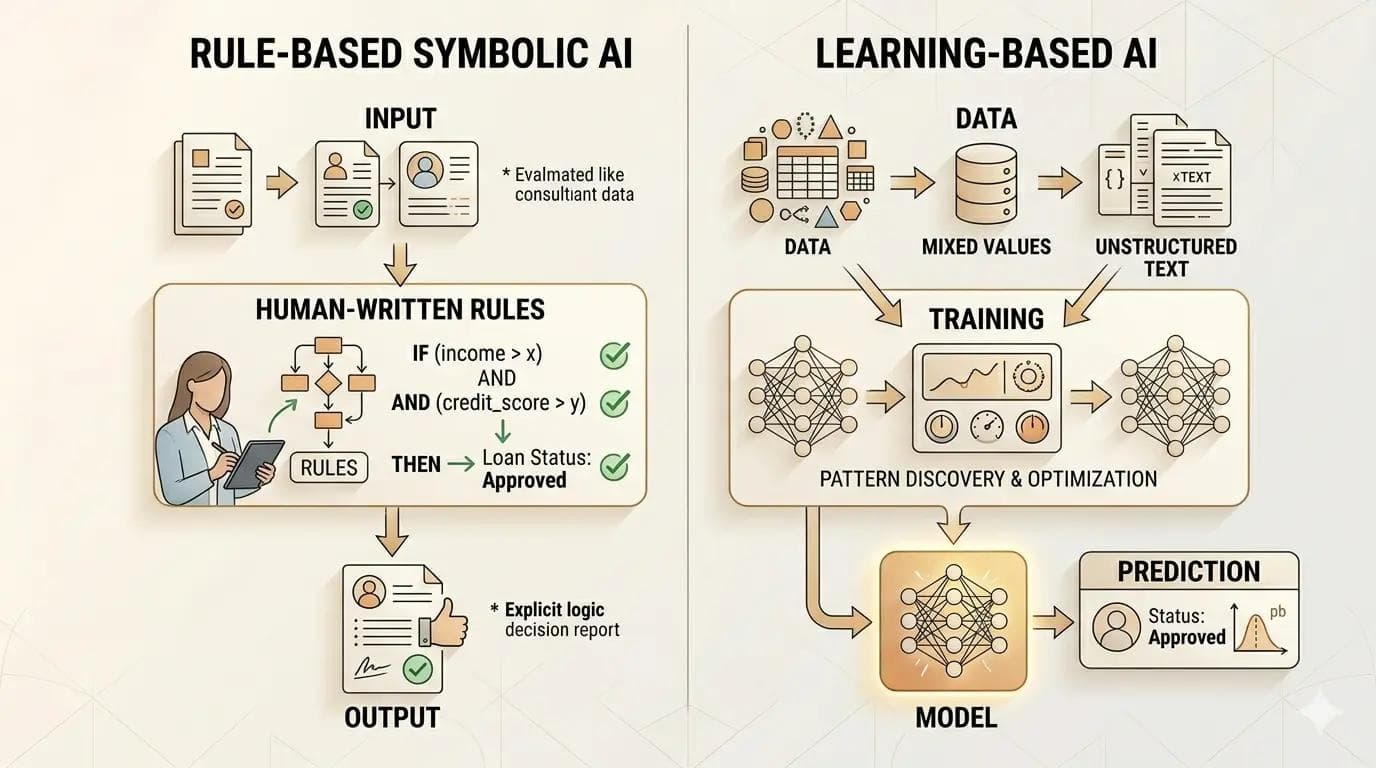
The idea was straightforward. If humans reason using rules, then perhaps we can write those rules into a machine. If we define enough conditions, instructions and decision paths, maybe a computer can behave intelligently.
This worked in narrow areas.
A machine can follow rules very well. It can process structured information. It can apply logic. It can calculate faster than humans. It can solve problems where the rules are clear.
But real life is not always clear.
Human intelligence depends on context, memory, ambiguity, emotion, culture and common sense. We understand that the same sentence can mean different things in different situations. We know when someone is joking. We can recognise patterns from limited information. We can make decisions even when the data is incomplete.
Rule-based systems struggled with this.
You could keep adding more rules, but the world kept creating more exceptions.
That was one of the first big lessons in AI.
Intelligence is not just rule-following.
The AI winters
Because early expectations were so high, disappointment was inevitable.
When AI systems failed to deliver on the promises made by researchers, companies and governments, funding reduced. Public excitement dropped. Many people started doubting whether AI could ever become useful outside research labs.
These periods became known as AI winters.
The AI winters are important because they remind us that technology progress is not always linear.
AI did not move smoothly from idea to success. It went through cycles of hype, overpromising, underdelivery and renewed progress.
This pattern is still relevant today.
Even now, businesses can fall into the same trap. They may expect AI to solve everything quickly. Then they become disappointed when implementation is harder than expected.
The lesson is simple.
AI value does not come only from the model. It comes from the process around it.
Data quality, workflow design, governance, user adoption and human review matter as much as the technology itself.
Neural networks changed the direction
A major shift came when researchers started focusing more on learning systems.
Instead of programming every rule manually, neural networks allowed machines to learn patterns from examples.
This idea was loosely inspired by the human brain, although artificial neural networks are much simpler than real brains.
The approach was different from symbolic AI.
Rather than telling the machine exactly what to do, researchers gave it data and allowed it to adjust internal parameters during training. Over time, the system could recognise patterns that were difficult to define manually.
This was a major change.
It meant that machines could move from rules to learning.
For a long time, however, neural networks had limitations. They needed a lot of data. They needed computing power. They needed better algorithms. The idea was promising, but the infrastructure was not yet ready.
Then the environment changed.
More digital data became available.
Computing power improved.
Graphics processing units made large-scale training faster.
Algorithms improved.
Cloud infrastructure made experimentation easier.
Together, these changes created the foundation for modern deep learning.
Deep learning changed perception
Deep learning became especially powerful in areas such as image recognition, speech recognition and pattern detection.
One of the major moments came in 2012 with AlexNet, which showed the strength of deep learning in image recognition.
This was not just another academic milestone. It changed how people thought about AI.
Before deep learning became dominant, many systems depended heavily on manually designed features. Researchers had to decide what the system should look for.
Deep learning changed that.
The model could learn useful features directly from data.
This was a powerful idea. It meant machines could discover patterns that humans might not manually define.
From there, AI progress accelerated across many domains.
Image recognition improved.
Speech recognition improved.
Translation improved.
Recommendation engines improved.
Fraud detection improved.
Medical imaging improved.
Autonomous systems improved.
But language remained one of the hardest problems.
Why language was difficult
Language is not just a sequence of words.
Language carries context, intention, memory, tone and meaning.
A word can mean different things depending on where it appears. A sentence can refer to something said earlier. A question can carry hidden assumptions. A good answer needs more than grammar. It needs relevance.
For a long time, machines could process language, but they did not feel natural.
They could classify text.
They could translate with varying quality.
They could match keywords.
They could answer simple questions.
But they often struggled with longer context, nuance and flexible conversation.
This is why the next breakthrough was so important.
Transformers changed language AI
In 2017, the transformer architecture changed the direction of modern AI.
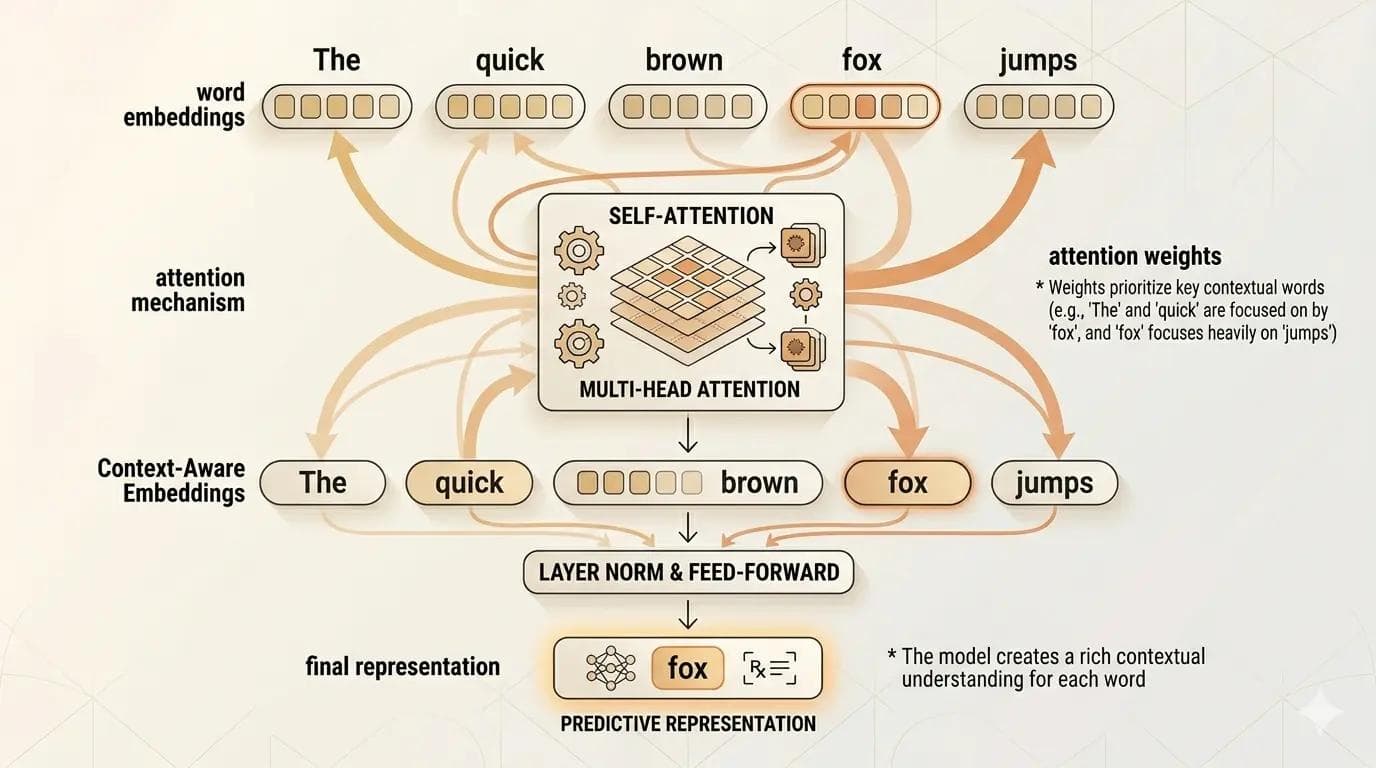
The important idea behind transformers is attention.
In simple terms, attention allows a model to look at different parts of the input and understand how they relate to each other. Instead of processing words only one after another, the model can weigh relationships across the text.
This helped models handle language more effectively.
Transformers became the foundation for modern large language models.
GPT models, many open-source language models and several modern AI systems are built on this broader transformer-based approach.
This is where the path toward ChatGPT became clearer.
Large models trained on large amounts of text became capable of generating fluent, useful and context-aware responses.
They could write.
They could summarize.
They could translate.
They could explain.
They could generate code.
They could imitate different formats and tones.
This was a major step forward.
But it also created a new problem.
The output sounded intelligent, even when it was wrong.
ChatGPT became the public interface of AI
ChatGPT was not the first language model. It was not the first chatbot. It was not the first AI tool.
But it became the public interface of modern AI.
The reason was not only technical performance. The reason was usability.
A normal person could use it.
That made the technology visible.
In business terms, ChatGPT turned AI from an infrastructure capability into a user-facing experience.
This is a big shift.
When technology becomes easier to use, adoption expands. When adoption expands, business expectations change. When business expectations change, operating models eventually change.
That is what we are seeing now.
Employees are not waiting for enterprise AI strategies. Many are already using AI tools informally to improve their work.
This creates a management challenge.
Companies need to move from informal AI usage to responsible AI adoption.
That means clear policies, approved tools, training, data protection, quality review and governance.
Without that, AI becomes both a productivity opportunity and an operational risk.
The risks became visible too
The same features that make generative AI impressive also make it risky.
Large language models can produce fluent answers. But fluency is not the same as truth.
They can generate wrong information with confidence.
They can invent sources.
They can misunderstand context.
They can produce biased or incomplete answers.
They can expose sensitive information if used carelessly.
They can create copyright and attribution concerns.
They can make users overconfident.
This is especially important in professional environments.
In consulting, finance, law, healthcare, M&A, audit, regulatory reporting and compliance, a confident wrong answer can cause serious damage.
A wrong summary can change a decision.
A wrong assumption can affect a valuation.
A wrong legal reference can create reputational risk.
A wrong financial interpretation can mislead stakeholders.
A wrong automation step can affect downstream systems.
This is why AI should not be treated as an unquestionable expert.
It should be treated as a powerful assistant that still needs human judgment.
The question is not whether AI can produce an answer.
The real question is whether the answer is reliable enough for the decision being made.
The next shift: from chatbots to agents
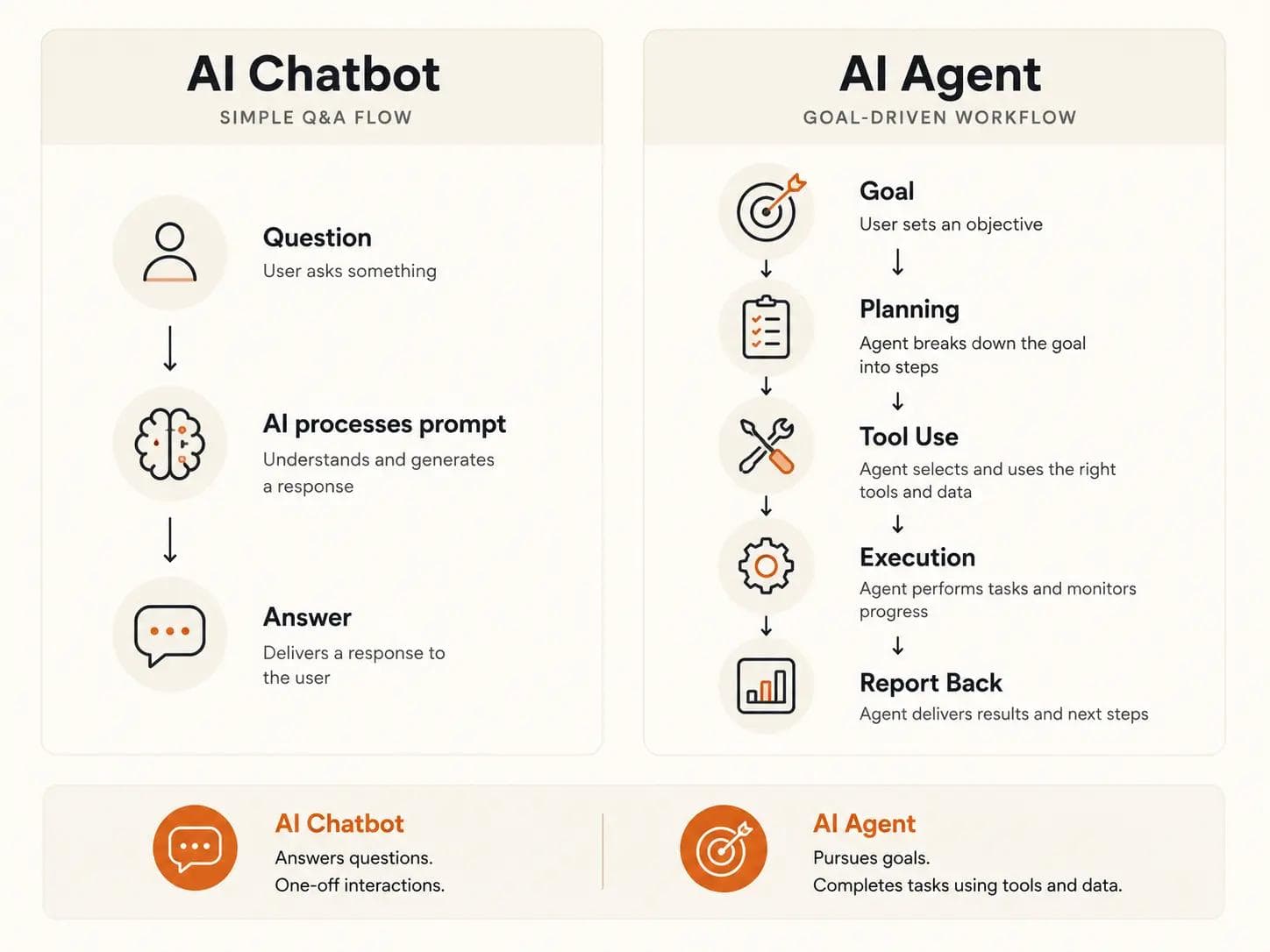
The next phase of AI is not only about better chatbots.
It is about agents.
A chatbot answers questions.
An agent takes actions.
An AI agent may be able to search information, read files, write code, update systems, generate reports, send messages, create workflows and coordinate tasks across tools.
This is a major change.
In traditional software, the user operates the application.
In an AI-agent world, the user may describe the outcome and the system may decide the steps.
For example, instead of opening multiple tools, downloading data, preparing analysis and drafting an email, a user may ask an agent to prepare a weekly business review. The agent could collect data, identify changes, create a summary, prepare slides and draft the message.
This sounds powerful.
But it also increases risk.
If a chatbot gives a wrong answer, the user may still catch it before acting. If an agent takes the wrong action, the mistake may already be executed.
That is why agentic AI needs stronger controls.
Permissions matter.
Audit trails matter.
Human approvals matter.
Data boundaries matter.
Testing matters.
Fallback processes matter.
The future of AI will depend not only on capability, but also on control.
What businesses should learn from AI history
The history of AI gives business leaders an important lesson.
AI progress is real, but it is not magic.
Every major breakthrough came from a combination of ideas, infrastructure and practical need.
Turing gave the question.
Dartmouth gave the field a name and direction.
Symbolic AI showed the value and limits of rule-based reasoning.
AI winters showed the danger of overpromising.
Neural networks showed the power of learning from data.
Deep learning showed the value of scale.
Transformers changed language AI.
ChatGPT changed accessibility.
Agents may change workflows.
For business, this means AI should not be seen only as a technology trend.
It should be seen as an operating model question.
Where can AI reduce manual effort?
Where can it improve decision quality?
Where can it accelerate analysis?
Where can it support client delivery?
Where does it create unacceptable risk?
Where should humans remain fully responsible?
Where can workflows be redesigned instead of simply automated?
These are the questions that matter.
The companies that benefit most from AI will not be the ones that blindly adopt every new tool.
They will be the ones that understand their processes deeply and apply AI where it creates measurable value.
Why this matters for knowledge work
AI is especially important for knowledge work because much of knowledge work involves language, analysis and decision support.
Professionals spend time reading documents, preparing summaries, building reports, analysing data, drafting communication and explaining findings.
Generative AI can help with many of these tasks.
But it does not remove the need for expertise.
In fact, expertise becomes more important.
A junior user may accept a weak AI answer because it sounds polished. An experienced professional can challenge the output, identify missing assumptions and improve the result.
This is a key point.
AI does not replace judgment.
It increases the value of judgment.
In the future, strong professionals may not be the ones who avoid AI. They may be the ones who know how to use AI carefully, question it properly and combine it with domain expertise.
The consulting and analytics angle
For consulting, analytics and M&A work, AI has a practical role.
It can support data preparation.
It can help summarize due diligence documents.
It can generate first drafts of analysis.
It can assist with scenario thinking.
It can explain trends in financial or operational data.
It can help build reusable workflows.
It can improve how teams document assumptions and findings.
But the final interpretation still requires professional responsibility.
In M&A, for example, the numbers alone do not tell the full story.
A revenue trend may look strong, but the quality of revenue may be weak.
A synergy estimate may look attractive, but the integration risk may be high.
A customer cohort may show growth, but churn may be hidden in a segment.
A forecast may look reasonable, but the assumptions may be optimistic.
AI can help surface patterns.
Humans must still understand what those patterns mean.
That is why the most valuable use of AI in business is not replacing experts. It is helping experts work with better speed, structure and coverage.
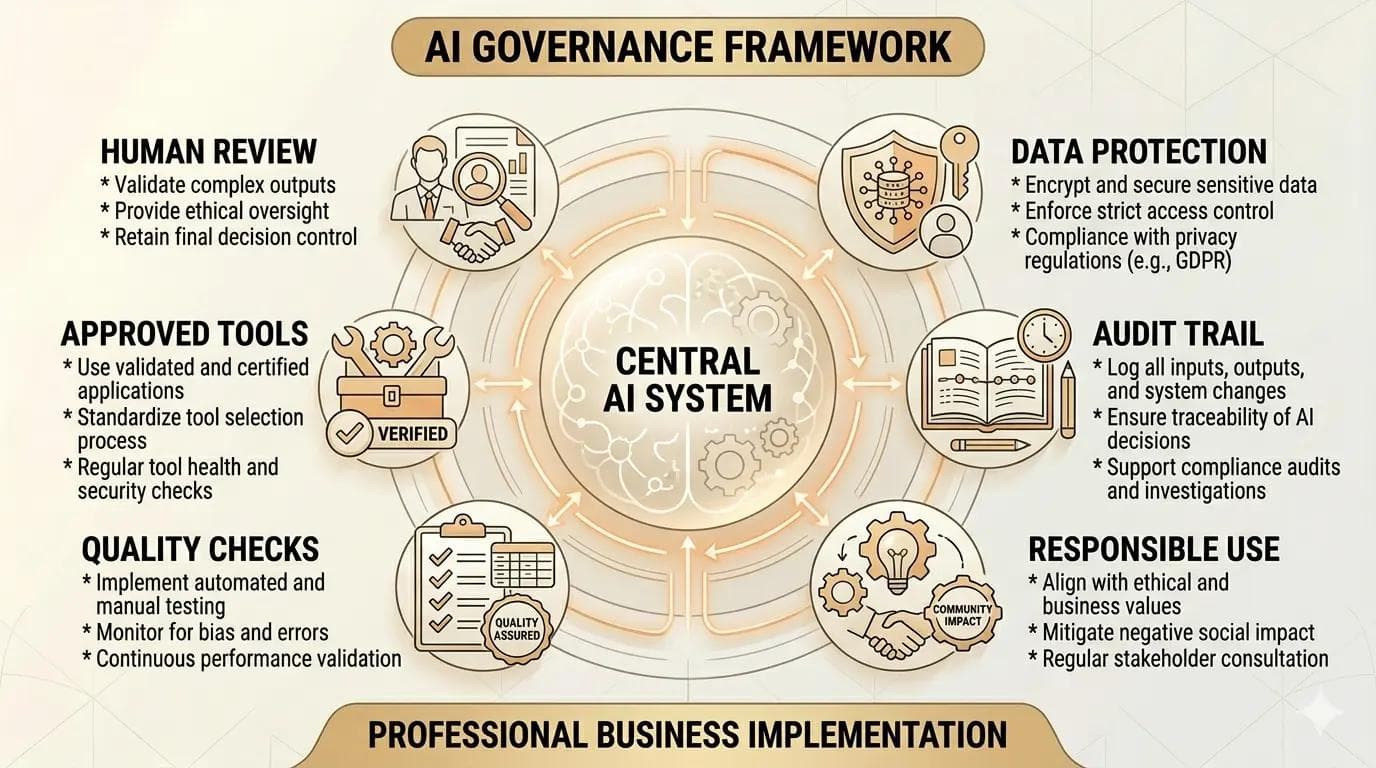
AI adoption is not only a technology project
Many companies make the mistake of treating AI adoption as a tool rollout.
They choose a platform, give access to employees and expect productivity to improve.
But AI adoption is more complex than that.
To create real value, companies need to answer practical questions.
Which use cases are approved?
Which data can be used?
Which tools are safe?
Who reviews the output?
How is quality measured?
How are mistakes reported?
How do teams learn prompt discipline?
How do we prevent sensitive data leakage?
How do we integrate AI into existing workflows?
Without these answers, AI remains experimental.
With these answers, AI can become operational.
This is where business transformation becomes important.
AI should not sit separately from the way people work. It should be embedded into processes, controls, roles and decision points.
The real lesson from 70 years of AI
The story of AI is not a straight line.
It includes ambition, disappointment, recovery and acceleration.
Ideas that looked too early eventually became useful when computing power, data and algorithms caught up.
This is why ChatGPT should not be seen as a sudden event.
It is better understood as a visible milestone in a long compounding journey.
The same may be true for the next phase of AI.
Today’s agents may still feel early. Some will fail. Some will be overhyped. Some will create risk. But over time, the combination of better models, better tools, better governance and better business integration may change how work is performed.
The real question is not whether AI will improve.
It will.
The real question is whether organizations will learn to use it responsibly.
Conclusion: AI is not magic, but it is a major shift
ChatGPT was not the beginning of AI.
It was the moment when AI became visible, usable and personal for millions of people.
Behind it sits a long history of research, from Turing’s question to symbolic AI, neural networks, deep learning, transformers and now agents.
For businesses, the lesson is clear.
AI should not be treated as a passing trend or as a magic solution. It should be treated as a powerful capability that needs the right use cases, governance, workflows and human judgment.
The winners will not be the companies that use AI everywhere.
The winners will be the companies that know where AI helps, where it does not, and how to combine machine capability with human expertise.
That is where the real transformation begins.